


Racing Rush 3D: Car Game
Tunergy
I tried Racing Rush 3D: Car Game as the sort of quick racing title that can be passed around on a shared phone or tablet, and its appeal is easy to understand. It puts the focus on immediate driving: get moving, avoid traffic, and use drifting to stay in control. That makes it approachable for a short break, especially when someone wants a racing game without a long explanation before the first attempt.
At the same time, I would not treat it as a complete replacement for a deeper racing simulator or a large competitive driving game. Its strongest quality is its directness. You can pick it up, understand the basic objective quickly, and hand the device to another person without needing a long tutorial session. My experience with it is best summed up as casual, fast-moving entertainment rather than a serious motorsport package.
How it works when several people share one device
A shared device changes the way I judge a racing game. On my own phone, I can tolerate a little repetition or a rough edge because I control the session. On a family tablet or a phone used by several people, the important questions become simpler: can the next player understand what to do, can a short session end cleanly, and is the game suitable for the people likely to pick it up?
This is where the straightforward design helps. The central activity is driving through traffic at speed, with drifting as the main skill to practice. A younger player can understand the goal by watching one run, while an experienced player can immediately work on smoother movement and better reactions. I found that useful in a household setting because the game does not require everyone to learn a complicated collection of menus before taking a turn.
A realistic example would be a shared tablet in the living room. One person plays for a few minutes while waiting for dinner, then passes it to a sibling or parent. The handoff works best when each player treats the game as a self-contained turn rather than expecting a long personal progression session. That keeps the experience friendly and avoids the common problem where one user occupies the device for too long.
Related News






The traffic is also important in this situation. It gives each run an immediate visual problem to solve, so players can compare their decisions rather than simply comparing how long they owned the device. One person may prefer cautious gaps, while another may take more risks and drift around obstacles. That difference creates a small amount of conversation without requiring online competition or a formal multiplayer setup.
What I would decide before handing over the device
I would first make sure the person using the game understands that speed is not the only priority. In my experience, rushing toward every opening usually produces less controlled driving. A better first habit is to look beyond the nearest vehicle, choose a line early, and use drifting as a way to shape the car’s path rather than as decoration.
For a new player, I would suggest a few calm attempts focused only on avoiding traffic. Once that feels natural, drifting becomes easier to judge. This approach matters on a shared device because it prevents the first session from turning into a sequence of random crashes and frustration. It also gives younger or less experienced players a clear improvement path without making the game feel like homework.
Gallery
Another useful household rule is to agree on when a turn ends. Since this is a free racing game, it is tempting to keep trying immediately after a mistake. That can be enjoyable, but on a shared device it can also create arguments. A simple rule such as one run per turn, or a short time limit agreed by the household, makes the game easier to share fairly.
I would also avoid presenting it as a game that needs a personal account or a long-term commitment unless the player already wants that kind of experience. The practical strength here is the driving itself. For a quick family break, the less pressure placed on scores, ownership, or progression, the better the game fits the situation.
Keeping setup and account boundaries clear
The game is free to download, which lowers the barrier for trying it on a household device. However, free does not automatically mean cost-free in use. Racing Rush 3D: Car Game includes optional purchases priced from $1.99 to $9.99 per item, so I would check the device’s purchase settings before letting a child use it unsupervised.
This is not a criticism of the driving itself; it is a practical distinction between installing a game and managing it responsibly. If the device belongs to several people, the person responsible for purchases should know that in-app items exist. A child may understand that the game is free and still not understand that tapping a purchase button can create a charge. Clear household boundaries are more useful than assuming everyone will interpret the store page in the same way.
I would keep the store account under the adult’s control and make sure other users know which actions are allowed. If the tablet is shared between children, it is worth agreeing that nobody changes purchase settings or confirms an item without asking. That advice is especially relevant because a quick racing session encourages rapid tapping, and mistakes are easier when somebody is trying to restart immediately.
The Android requirements are also worth checking before installation. The game supports Android 7.1 and later, so an older device may not be suitable even if it still handles other basic apps. I would check the operating system first rather than treating a failed installation as a problem with the game. On a shared household device, compatibility matters because the device may be older than the personal phones used by adults.
The current version is 0.1.4, which tells me to keep expectations measured. I do not read that as a reason to reject it, but I would approach it as a developing casual racer rather than a finished, feature-heavy driving platform. If your household expects a large selection of modes, extensive customization, or a highly polished long-term structure, a more established racing game may be a better choice.
Coordinating turns without making the game feel competitive
Racing games naturally invite comparison, but not every household enjoys turning every activity into a contest. I think this title works better when players compare driving choices instead of treating one result as proof that somebody is better. Did a player take a safer route? Did a drift help avoid traffic, or did it create a wider problem? Those questions make the game more social and less likely to discourage a beginner.
A useful rotation is to let one player drive while another watches for upcoming traffic. The observer can point out a gap or suggest waiting, but should avoid giving constant instructions. That small distinction matters: helpful coordination can teach awareness, while nonstop coaching can make the driver feel as if the game is being played for them.
I also found that the game suits short, clearly separated sessions more than a single extended sitting. The basic loop is easy to understand, but repeated traffic avoidance can feel similar after a while if someone wants a broad career structure. Passing the device after a few runs keeps the strongest part—the immediate reaction challenge—fresh for the next person.
For siblings or friends, I would encourage a “best decision” challenge rather than only a “best score” challenge. One player can try to make the cleanest sequence of moves, while another experiments with drifting. This gives different skill levels a fairer way to participate. A beginner can be praised for learning control even if an experienced player is faster.
There is also a practical advantage to keeping expectations modest. Because the game is built around quick driving action, it is a good filler activity while waiting, but it may not hold a whole group’s attention for an entire evening. If the household wants a game designed around extended shared play, a dedicated multiplayer racer or a party game will probably coordinate people better.
Age, trust, and the kind of player it suits
The content rating is Everyone, which makes the game broadly suitable for a general audience. I still prefer to match the game to the individual player rather than relying on an age label alone. The main concern for a child is not difficult subject matter; it is whether the child can handle fast traffic, repeated mistakes, and the presence of optional purchases in a responsible way.
For younger players, I would demonstrate the controls and explain the household purchase rule before handing over the device. That is enough to establish trust without making the game feel restricted. An adult does not need to sit beside every attempt, but a first session together can show whether the player understands drifting and knows when to ask for help.
Older children and casual adult players will probably appreciate the immediate action more than players looking for detailed realism. The game’s premise is easy to grasp, and the traffic creates pressure quickly. I would recommend it to someone who enjoys reaction-based driving and wants a free title for brief sessions. I would be more cautious about recommending it to someone who expects realistic vehicle handling, a deep tuning system, or a carefully structured racing season.
It is also not the best fit for someone who dislikes repetition. The core pleasure comes from improving decisions during driving, so a player who needs constant new environments, vehicles, or objectives may lose interest sooner. That is not a flaw for a short-session game, but it is an important trade-off when choosing something for a shared device that needs to satisfy several personalities.
The developer is Tunergy, and the game has passed 500K+ installs, which suggests that it has found an audience beyond a tiny personal experiment. I would still judge it on the experience it offers rather than on its reach. The install figure makes it easier to see the game as an accessible casual option, but it does not turn it into a substitute for a premium racing title.
Where the driving feels strongest and where it asks for patience
The strongest part is the combination of speed and traffic avoidance. A clear road would make the driving less demanding, but traffic forces me to read the space ahead and commit to a route. Drifting adds another layer because a turn is not only about steering toward an opening; it is also about controlling how the car exits that movement.
My practical tip is to avoid using a drift every time the road changes direction. Save it for moments when it genuinely helps reposition the car or maintain a useful line. Overusing it can make a correction harder, especially when traffic is already narrowing the available space. This is the kind of small technique that is easy to miss if you only read the short store description, but it makes the game feel more manageable after a few attempts.
I would also watch the road farther ahead than the nearest vehicle. Reacting only when an obstacle is directly in front of the car leaves little room for a controlled move. Looking ahead gives me time to decide whether to pass, slow my approach, or prepare a drift. That habit is especially helpful for children because it changes the game from frantic tapping into a simple visual planning exercise.
The limitation is that the same central loop can become familiar. The game’s identity is clear, but players who want a broad collection of racing disciplines may find it narrow. Traditional racing games usually offer defined tracks, opponents, laps, and a sense of finishing a complete event. This title instead emphasizes the continuous pressure of moving through traffic, so it is better for quick reflex practice than for recreating a formal race weekend.
Compared with an arcade racer built around power-ups and head-to-head events, this game feels more focused on personal control. Compared with a simulator, it is easier to approach but less suited to someone who wants detailed vehicle behavior. That middle ground is useful for a shared household device: it is less demanding than a simulator and more skill-based than a purely decorative driving game.
My household verdict after weighing convenience and limits
I would install Racing Rush 3D: Car Game on a shared Android device when the goal is quick, understandable racing that several people can try without a long learning curve. Its free entry, Everyone rating, and simple focus on traffic, speed, and drifting make it approachable. The game is particularly suitable for a household that can agree on turns and keep optional purchases under adult control.
I would skip it for a household searching for a deep long-term racer. Players who want extensive customization, realistic simulation, formal championships, or a strong multiplayer structure should look elsewhere. The current version, 0.1.4, also encourages me to view it as a compact casual experience rather than a fully developed racing ecosystem.
My final recommendation is therefore specific: try it if you need a free driving game for short breaks, friendly handoffs, and gradual practice with traffic awareness. Before sharing it with children, confirm that the device runs Android 7.1 or later and set a clear rule around the optional $1.99-to-$9.99 purchases. With those boundaries in place, Racing Rush 3D: Car Game is an easygoing household racer whose best moments come from making one clean decision at a time.
FAQs for Racing Rush 3D: Car Game
What is Racing Rush 3D: Car Game?
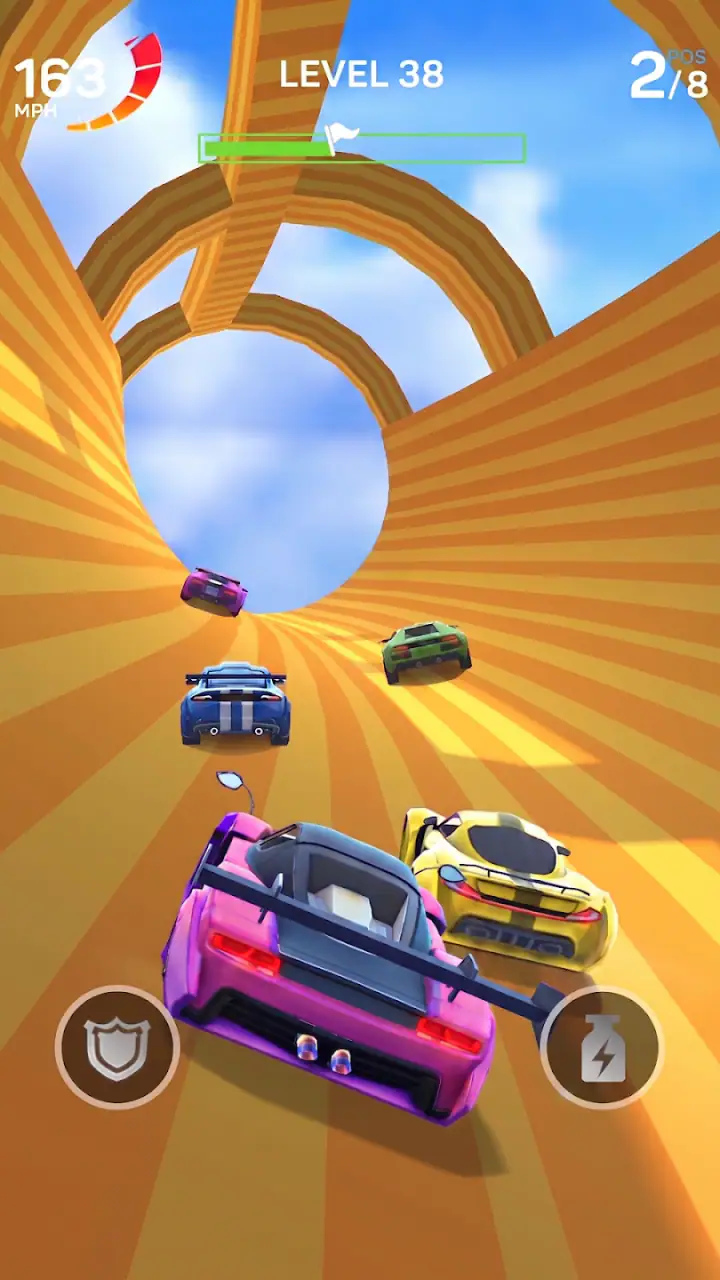
Racing Rush 3D: Car Game is a fast-paced mobile racing game focused on short, action-packed driving sessions. Players steer through 3D tracks, avoid obstacles, overtake traffic or rival vehicles, and aim to finish races successfully. Its straightforward controls make it accessible to casual players, while increasing difficulty and upgrade options provide additional challenges for users who want to improve their performance.
How do you control the car in Racing Rush 3D: Car Game?
The game is designed around simple touch-based controls, so you do not need a physical controller to play. Depending on the available gameplay mode, steering may involve swiping or tapping on the screen while acceleration is handled automatically or with an on-screen command. The controls are easy to understand, although precise timing is important when changing lanes, avoiding hazards, and passing opponents.
Can Racing Rush 3D: Car Game be played offline?
Racing Rush 3D: Car Game may allow core racing sessions to be played without a constant internet connection, which is useful when travelling or using limited mobile data. However, certain features can require connectivity, including advertisements, online services, updated content, purchases, or leaderboard functions. It is best to launch the game once while connected so that all required files and services can load properly.
Does Racing Rush 3D: Car Game include advertisements or in-app purchases?
As with many free-to-download mobile racing games, Racing Rush 3D: Car Game may display advertisements during or between sessions and can offer optional in-app purchases. These purchases may be connected with upgrades, extra currency, cosmetic items, or other conveniences. You should review the store listing and your device’s purchase settings before playing, particularly if children may use the device.
What devices are suitable for Racing Rush 3D: Car Game?
The game is intended for Android and iOS smartphones and tablets that meet the operating system and hardware requirements shown on the relevant app store page. A relatively recent device should provide smoother controls, faster loading, and more stable 3D performance. Older or entry-level phones may still run the game, but graphics quality, frame rate, battery consumption, and available storage can affect the overall experience.
Pros
- Fast-paced 3D races that are easy to pick up and play.
- Simple controls work well for short gaming sessions.
- Varied tracks keep the races from feeling too repetitive.
- Car upgrades provide a clear sense of progression.
- Runs smoothly on many modern Android and iOS devices.
Cons
- Gameplay can become repetitive after extended play.
- Some upgrades may require considerable grinding.
- Advertisements can interrupt the racing experience.
- Limited customization may disappoint serious car enthusiasts.
- Touch controls can feel imprecise during sharp turns.


